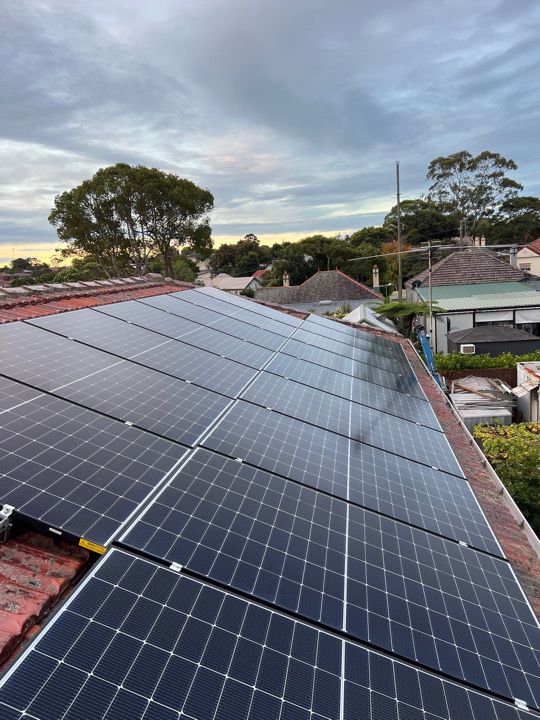

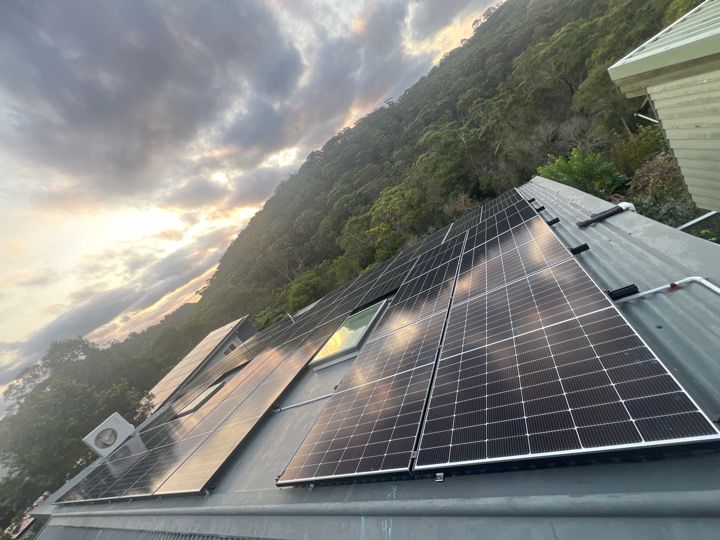
Solar panels on a Sydney roof at sunset.

Rebates & finance · updated September 2026

The government pays part of your system. See how much.

  • Solar STCs ~$1,710 off a 6.6kW system in Sydney
  • Battery discount ~$258/kWh on the first 14 kWh of storage
  • Next step-down 1 Jan 2027 when the battery rate falls again

Rebate & incentive estimator

Your system, your state, your rebate.

Every figure updates as you change an input. The formulas are shown underneath the result, so you can check our working.

10 kW

Small-scale certificates cover systems up to 100 kW, homes and businesses alike.

27 kWh

Rebate tiers: full rate to 14 kWh, 60% to 28 kWh, 15% to 50 kWh.

The zone follows your state's capital. Regional postcodes can differ, so change it if you know yours.

typical estimate

Filled from typical installed prices (about $950 per kW of solar and $900 per kWh of storage). Type in your own quote for an exact figure.

Estimated government support

$0

0% of the system price

Solar STC discount
$0
Federal battery discount
$0
State incentive
$0
System price before rebates
$0
Your estimated cost
$0

Claim your rebate estimate
Show the working

Certificates are whole numbers, so counts are rounded down. STC price assumed at $38 each after trading fees (the market has sat around $37–$40). Rates as at September 2026. We confirm every figure against the Clean Energy Regulator's rules on your written quote.

Policy overview

Four layers of support, and who pays each one.

Three for homes, and a fourth that opened to NSW businesses in September 2026.

Federal · solar

Small-scale Renewable Energy Scheme

Every eligible solar system creates small-scale technology certificates (STCs) based on its size, your sun zone and the years left until the scheme ends in 2030.

kW × zone rating × years left × STC price
  • Available Australia-wide, for systems up to 100 kW today
  • Expected to cover business systems up to 1 MW from 1 October 2026, once the regulations are made
  • Worth a little less every January until 2030
  • Needs an accredited installer and approved equipment

Federal · batteries

Cheaper Home Batteries Program

Running since July 2025 and designed to take around 30% off a typical battery. Since 1 May 2026 the rate tapers with size, so the first 14 kWh earn the most.

kWh (tiered) × 6.8 STCs × STC price
  • Homes, small businesses and community groups
  • Battery must be VPP-capable. Joining one is optional
  • Rate steps down every January and July
State & territory

Local incentives on top

Some states stack their own battery incentive on the federal discount, usually in return for joining a virtual power plant. Most state rebates have now closed.

State battery incentives, September 2026
NSWVPP incentive, first 28 kWh; amount set by provider
WA$130/kWh Synergy, $380/kWh Horizon, 10 kWh cap
ACTSustainable Household loan, no rebate
SAVPP offers through retailers
VIC · QLD · TAS · NTFederal discount only
NSW · business batteriesNew · 7 Sep 2026

Peak Demand Reduction Scheme

NSW now pays businesses to install commercial-scale batteries that ease the grid at peak times. The incentive is paid in Peak Reduction Certificates (PRCs), and at current prices it is often worth 20% to 50% of a fully installed battery.

peak kW shifted × 900 × network factor × PRC price
NSW commercial battery activities
BESS4Small and medium business sites, over 20 kWh up to 200 kWh usable
BESS5Commercial, industrial and community sites, over 200 kWh up to 30 MWh
StackingBESS4 also stacks with the federal battery discount on systems up to 100 kWh
  • Battery-only projects qualify; adding new solar earns a higher rate
  • Not for homes or data centres, and one claim per site
  • CEC-listed gear and an SAA-accredited installer (BESS4); UL9540A-tested battery (BESS5)

Commercial finance

Solar that pays its way from the first bill.

For most businesses the question isn't whether solar saves money, it's how to fund it without tying up working capital. We model your site, take every incentive off, then show you the same system under each way of paying for it.

Federal · solar 100 kW to 1 MW ~20%

off a mid-sized business system through upfront STCs, expected from 1 Oct 2026 once the regulations are made. Until now the upfront discount stopped at 100 kW.

NSW · business batteries 20–50%

off an installed battery through Peak Reduction Certificates, for installs from 7 Sep 2026. Battery-only projects qualify; new solar alongside earns more.

Federal · batteries to 100 kWh Stacks

The Cheaper Home Batteries discount also covers small businesses, and it stacks with the NSW incentive on eligible systems up to 100 kWh.

Four ways to pay for it

Outright purchase

Pay once and keep every dollar of saving. The lowest total cost over the system's life, and the fastest payback.

  • Incentives come straight off the invoice
  • A business asset you can depreciate

Best for businesses with spare capital looking for the highest return

Equipment finance

A chattel mortgage or equipment loan: you own the system from day one and repay it over a fixed term, usually a few years.

  • Often little or nothing upfront
  • Repayments can sit below the monthly saving
  • Some lenders discount green loans, including CEFC-backed programs

Best for keeping cash free while still owning the asset

Rental or operating lease

A fixed monthly payment for the use of the system, with the option to own it at the end of the term.

  • No capital outlay
  • Payments treated as a running cost

Best for businesses that prefer a predictable operating expense

Power purchase agreement

A provider owns, installs and maintains the system on your roof. You buy the power it makes at an agreed rate, below what you pay the grid.

  • $0 upfront, no maintenance
  • Pay only for the energy you use

Best for larger sites on long leases or with steady daytime load

Commercial solar finance options compared
Purchase Equipment finance Rental / lease PPA
Upfront costFull price, less incentivesLittle or noneNoneNone
Who owns itYouYou, from day oneFinancier, option to buyProvider
IncentivesOff your invoiceOff the amount financedBuilt into the paymentBuilt into the rate
MaintenanceYouYouOften includedProvider
Tax treatment*DepreciationDepreciation and interestPayments as expenseEnergy bill as expense

NSW battery incentive · worked examples

Indicative NSW Peak Reduction Certificate values
200 kWh battery~$44,100battery only
200 kWh + 100 kW solar~$56,160about 26% off a ~$220,000 project
5 MWh battery~$940,680about 36% off a ~$2.6m project

Certificate values are NSW Government modelling at a $3.00 certificate price, GST inclusive; project costs are indicative industry figures. Certificate prices move with the market, so your figure is confirmed in the quote.

How we build your business case

  1. Send us 12 months of bills or your interval data, and we'll look at when you use power, not just how much.
  2. We size the solar and battery around your daytime load and your demand peaks.
  3. Every incentive is calculated: STCs, PRCs and the federal battery discount where they stack.
  4. You see each finance option side by side, month by month, before you commit to anything.

*General information only, not financial or tax advice. Sinvesta Group is not a lender: finance is provided by third-party lenders, subject to their approval and terms. Tax treatment depends on your business, so check it with your accountant. The expanded federal solar rebate is expected from 1 October 2026, subject to the regulations being in place.

Finance partners

Flexible commercial & residential finance options.

We work with three finance partners, so homes and businesses can spread the cost of solar and storage over time.

Homes

Brighte

Flexible payment plans for home solar and battery systems, including interest-free options on eligible purchases.

  • Spread the cost in regular repayments
  • Interest-free plans on eligible systems
  • Apply online with a quick decision
Ask about Brighte finance
Homes & business

Plenti

Competitive green loans with fast approvals for residential and commercial clean-energy upgrades.

  • Green loan rates for clean-energy upgrades
  • Fast online approvals
  • Fixed repayments you can plan around
Ask about Plenti finance
Business

SmartEase

Commercial equipment leasing and payment solutions tailored to business solar and energy storage.

  • Leasing built for business solar and storage
  • Keeps working capital free
  • Repayments matched to your savings
Ask about SmartEase finance

Finance is provided by our partners, subject to their eligibility criteria, approval and terms. Rates, fees and interest-free periods vary by product; read the lender’s terms before you apply. Sinvesta Group is not a lender.

Timing

The same system earns less every year you wait.

Solar certificates are calculated on the years left until 2030, so the discount on your system shrinks each January. The battery rate falls faster, every six months, with the next cut on 1 January 2027.

Solar STC discount for the system in your estimate, at today's STC price.

Questions

Rebates, answered plainly.

Do I have to fill in any rebate paperwork?

Not for the federal discounts. You assign the certificates to us, we create and sell them, and the value comes straight off your invoice. For a state incentive we'll walk you through the program or VPP sign-up.

Can I combine the federal and state incentives?

Yes. Where a state program is running, it stacks on the federal battery discount and the solar STCs. The estimator adds them together for your state.

Do I have to join a virtual power plant?

For the federal battery discount, no: the battery only has to be capable of joining one. The NSW and WA incentives do require you to sign up, which is why the estimator asks.

Why does a bigger battery get less per kWh?

Since 1 May 2026 the federal rate is tiered: the full rate on the first 14 kWh, 60% of it up to 28 kWh, and 15% up to 50 kWh. Nothing is paid above 50 kWh. Bigger batteries still earn more in total, just less for each extra kWh.

Do businesses get these rebates?

Yes. Solar systems up to 100 kW earn STCs whoever owns them, and the federal battery program covers small businesses. From 1 October 2026 the upfront STC discount is expected to extend to systems up to 1 MW, once the regulations are in place; larger systems earn large-scale certificates each year instead. In NSW, business batteries over 20 kWh can also earn Peak Reduction Certificates. See business finance for how it all adds up.

Can my business go solar with no upfront cost?

Yes. Equipment finance, a rental or a power purchase agreement can all start with nothing down, and a well-sized system often saves more each month than the repayment. We compare the options side by side in your business case. Finance is provided by third-party lenders and subject to their approval.

Free assessment

Lock in this year's rebate rates.

Send us your bill and we'll quote the system with every rebate you qualify for already taken off, confirmed in writing.

Call now
Get a quoteFree, no obligation WhatsApp us0415 301 979